

Episode 22: Shelby's Choice
The price of coffee and secrets

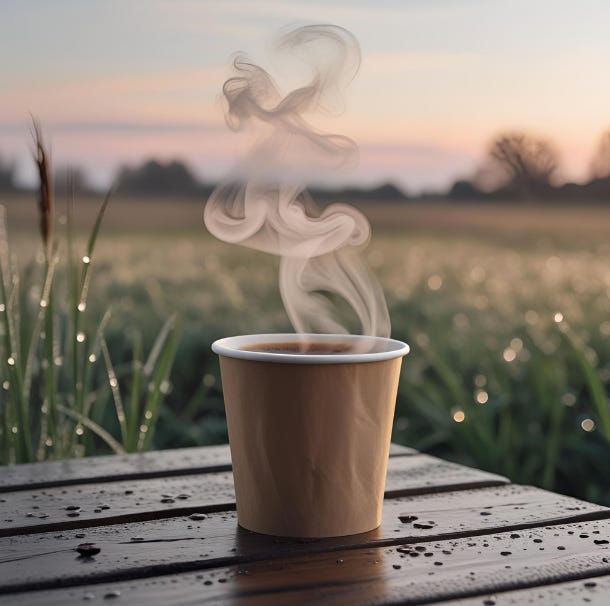
Islanders tend to rise late.
Unless they have a government job with a firm start time (i.e. teachers, and, well, that’s about the sum of it, since Jenny at the post office doesn’t believe in schedules and other externally-imposed deadlines), the residents of Looser Island prefer to wait and see if the ubiquitous clouds will blow out to sea with the mid-morning breeze, before rising to greet the day. It happens—not very often, but often enough to make it worthwhile to hunker down, curtains drawn, hoping for that miraculous moment when you roll out of bed, wince as your bare feet meet the cold floor, look out upon the world, and find sunshine sprinkling down like fairy dust.
Susan Droske is an exception to the general rule, intentionally rising early on a regular basis. She tried to explain it once, to Sam, but couldn’t quite articulate her reasons, how the pre-dawn darkness softens the edges, makes the ordinary mysterious, and always, always, holds the promise of better-than-yesterday.
There were many adjustments for Susan, after coming back to the island, including the loss of an early morning coffee shop.
When she returned from the foreshortened attempt at seminary, four year old Marta in tow, she’d had to learn to live without a twelve ounce latte with salted caramel drizzle on top. Unlike Seattle, Looser Island has no coffee shops that open at five in the morning, no twenty-four-hour Starbucks for the poets and the night-shift nurses. Bonnie’s Bakery sells the world’s best almond croissants and a dizzying variety of loose-leaf teas, but no coffee. The Mini-Mart sells something labeled coffee, but the distinction between that and the substance coming from its gas pumps is minimal. Barbara’s Breakfast Bar, when it’s open (that is, when Alessandra is around) sells smoothies and nothing else worth imbibing.
Incomprehensibly, The Coffee Hut opens at eleven o’clock.
Really, if you get up early and want a cup of coffee, your only option is to make it yourself. And even if you’re willing to wait until the island businesses open, if you want a cup of good coffee, made by someone else, and you don’t want to wait until eleven o’clock, you have to go to the Apple Cart and make your way to the carafes at the back of the store. (And if you go, know that it’s BYOC only, no paper cups provided.) As the caffeine-o-philes on the island discovered many moons ago, Lauren has the soul of a barista, and her coffee is quite tasty.
So it was that, shortly after returning to the island, Susan screwed up her courage and asked Lauren, tentatively, if she would ever consider opening the store earlier. Lauren said no, she had her hours posted, ten a.m. to seven p.m., Tuesday through Sunday, and if Susan wanted to have someone make her breakfast in bed or whatever that was tough titties for her.
Susan understood.
Notwithstanding the moment of childish rage years ago, when she discovered she was pregnant—moment being a figure of speech, since her tantrum had lasted several months— Susan was not a cruel person. She hadn’t meant to hurt Bill, or Lauren.
Lauren was not supposed to find out that Marta was her granddaughter, wasn’t supposed to know Bill offered to marry Susan but Susan turned him down, after which he slipped away trailing a miasma of sadness like the forlorn train of a bride’s gown that was never worn and now hangs, unsold, in a consignment shop.
No one was supposed to know, except Larry, of course, and attorney-client confidentiality kept her secret safe with him. But Jenny saw it on some official document that was a postcard, of all things, and mentioned it to Sam, and one day when he and Jim saw Marta playing on the beach Sam said how much like her grandmother Marta looked, and Jim mentioned it to Markus, and Lauren heard it from someone who heard it from Markus. It didn’t happen all at once—no “rumors traveling like wildfire” in this case, and everyone who told someone else felt badly about letting the truth slip just as soon as it was said, but you can’t unring that bell.
Lauren was angry at herself for not having figured it out on her own, and she was angry at Susan for not having told her.
And Susan understood.
It had been audacious and possibly even foolhardy to ask Lauren if she’d consider opening the Apple Cart earlier, and she’d had no real hope of success. But those morning moments were so tender, anticipating the day yet to be, a time when it was safe to leave a child gently snoring in the house, and step into the ragged tail of the night with only rabbits and deer and rapidly fading stars for company, on the pretext of needing to buy a cup of coffee, she thought it worth the risk to ask.
One cold misty Saturday in mid-February, Susan comes into the store at precisely ten o’clock, having long since accepted that no changes will be made, no exceptions allowed. Neither she nor Lauren is aware the coming week is pregnant with woe; her only goal is coffee, and getting out of the Apple Cart unscathed by sarcasm.
“Well,” Susan says to Lauren, who begins busying herself immediately with rearranging the boxes of cereal as soon as Susan enters. From the looks of it, that task has been neglected for quite some time, which of course raises serious questions about the age of the cereal. Then again, the islanders are not really cereal kind of people. “Well,” she says again, when Lauren fails to look up or otherwise notice Susan’s appearance, “same old weather as every February.”
“Looks like it,” Lauren says curtly. “Not much changes around here, and I guess that’s okay with me.”
Even that comment seems barbed, so Susan gets her cup of coffee and a couple of cookies, hands her money to Lauren, and heads toward the door. She stops to pat Shelby, who tolerates her because she is the mother of Bill’s child (though neither Lauren nor Susan is aware Shelby knows this fact—they aren’t the first to underestimate what a dog knows).
“You should get a dog,” Lauren says, gesturing toward Shelby.
“All the good ones are taken,” Susan says, smiling.
As if it’s a conspiracy, when she gets home Marta meets her at the door and says, “We should get a dog, Mom.”
Susan has never treated Marta like a child. This has both positive and negative consequences, and just now it means there is no tiresome squelching of childhood hopes ending with “you have no idea how much work a dog is” or “because I say so.” Susan sits on the worn brown loveseat in the front room of the small, comfortable house she inherited from her parents, pats the cushion next to her as an invitation, hands the second cookie to Marta, and says, “Why do you think we need a dog?”
Because she’s never been treated like a child, Marta is used to being taken seriously. She has obviously spent some time marshaling her arguments.
“For one thing,” she says, holding up her pointer finger, “you’re going to date again. I’m old enough that I won’t need a babysitter, if I have a big dog to protect me.”
Susan isn’t sure which statement to tackle first.
“What do you think you need protecting from?” she says.
“Strangers,” Marta answers promptly, visibly glad to get the easy one out of the way. “Everybody on the island is nice or crazy or weird, and I think you’d agree there’s nobody dangerous. But we get tourists, and you never can tell what they’ll do.”
“No, you never can tell,” Susan says. “But why do you think I’m going to date again? The dating pool here is not very big.”
“True,” Marta says, “though there’s Sam. I like Sam. And it wouldn’t be right for you to be single all your life. You’re too pretty to be single forever.”
“Thank you,” Susan says awkwardly. “But I’m not lonely,” she points out, “and I’m not looking for a change. I like that it’s just you and me. I like designing websites. I don’t need to date anyone.” And then, hoping to steer the conversation in a different direction, she says, “I was thinking of painting the house pink this summer, like a seashell. What do you think?”
“That will kill the resale value,” Marta says, as if she isn’t really listening.
Susan wonders fleetingly whether she’s done Marta a disservice raising her like an undersized adult. What are the chances of proper socialization for a child who talks of killing the resale value?
“I guess,” she says. “Anyway, my point is, I’ve got you. No exaggeration—you’re the best daughter a mother could ever ask for.”
Marta grins her crooked grin, looking properly nine years old again.
“You might get back together with my dad.”
Somehow, Marta makes it sound as though the words are coming from some other source, a disembodied entity hovering somewhere slightly above her left shoulder.
“Or Sam,” Marta says quickly, as if each new word can erase the words that came before. “You could date Sam again.”
Start with the obvious, Susan tells herself. “If I dated your dad, or Sam, you wouldn’t be home alone,” she says. “I’d take you with me. Like when we went to cranky old Jens Jensen’s farm with Sam, to pet the sheep.”
Susan can see Marta struggling against sounding precious or precocious, and she can see the moment straightforward wins out. “But what if you wanted to have sex?” Marta says.
Susan laughs. She laughs so hard she snorts a little coffee up the back of her nose. Marta holds very still, wrapped in invisible diminutive dignity, and waits.
When she catches her breath again, Susan asks, “What kind of dog do you think we should get?”
“Boxer,” Marta says, without hesitation. “Or Bernese Mountain dog.”
“Got a thing for the b’s?” Susan says, gently teasing.
“No,” Marta answers, solemnly. “I’m not interested in Beagles, Basset Hounds, Bichon Fries, or Basenjis.”
Susan succeeds in suppressing another smile.
“How is it,” Susan asks Sam the following Friday, tapping out the question on his shoulder, “how is it that my daughter is more concerned with my sex life than I am?”
She isn’t quite sure how it happened. It wasn’t intentional, of that much she is sure. She and Sam have dated (bringing Marta on their dates when the date involved something appropriate, like communing with sheep), broken up, tried a casual friends-with-benefits-thing, realized neither of them was constitutionally suited to casual, dated again, and then declared, quite seriously, that they were giving up on dating. Yet here they are, a little after noon, in various stages of undress, leaning lightly against each other, in the Post Office storage room. This is her least favorite place for a tryst, in part because they never know when Jenny might decide to do some actual work and wander in.
They make do, in a pinch.
Sam’s pale skin is faintly luminescent in the half-light, and Susan compares her skin to his, leg to leg, trailing her finger along the coarse hairs of his thigh and then leaping, as if her finger is a ballerina or a bird, to her own thigh.
“Wise beyond her years,” Sam says, craning his neck and taking the lobe of her ear ever so gently between his teeth.
“She wants a dog,” Susan says, pulling away, though it is pleasant to have one’s ear nibbled.
“Well,” Sam says, still trying to interest her in another round, tickling the space between her breasts with a discarded Fragile label, “I think you are the only family on Looser Island without a dog.”
Susan folds her arms across her chest, blocking him. “What do we need a dog for?”
Sam sighs. “I don’t think it’s ever a question of ‘need,’” he says.
That afternoon, as Susan is walking Marta home from school, she stops and declaims: “O Friday! O Blessed Day!”
“What?” Marta says. “Is that some kind of song or poem or something?”
“Maybe. Or maybe I just made it up. Anyway, what shall we do with our weekend?”
After mulling over their options, Marta returns to the conversation she’s raised every day since the previous weekend. (“You’re kind of dogged about this,” Susan had joked the day before, at which Marta just scowled.) “Y’know Mom,” she says now, “you of all people should be willing to consider a dog.”
“Why’s that?” Susan says, enjoying the crunch of gravel under her feet and the rainbow created by the prism of her glasses in the rain, thinking she’d miss these small pleasant sensations if she was hanging onto the other end of a leash, or stooping to gather an unpleasant mound of dog poo.
“Well,” Marta says triumphantly, like a gambler laying down her best card, “’Dog’ is “God’ spelled backward.”
The sound of a car approaching behind them requires moving to the side of the road, which in turn relieves Susan from the necessity of responding, at least momentarily.
It’s Sheriff Tom, but instead of driving past with a wave, he pulls over ahead of them.
“Hop in,” he yells, gesturing through the open window.
There is no time to wonder what on earth, and anyway, everything she holds dear is walking right beside her, so she is unprepared for the anti-matter space-engulfing vacuum that swallows her when Sheriff Tom says, “Bill’s been in an accident.”
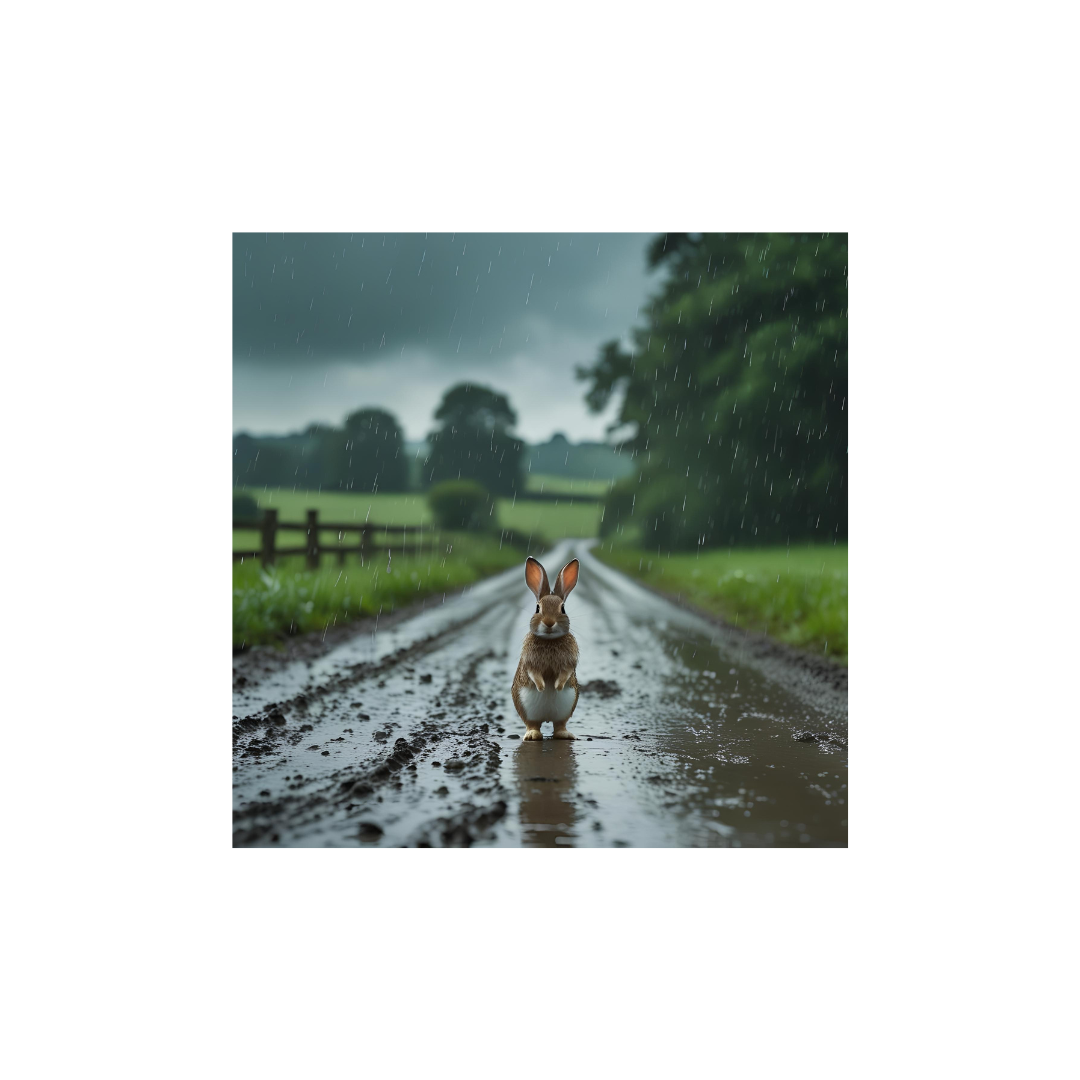
He explains that Bill came home for a visit, swerved to avoid a rabbit—“To avoid a rabbit?” Susan says, incredulous—and hit a tree. Bill has been life-flighted over to the mainland, he says, and Lauren is already en route to the hospital in Seattle.
He doesn’t have any other information just yet, he says. “There isn’t another ferry until six o’clock,” he adds. “But I wanted to catch you on your way home from the school, so you’d have time to pack.”
Susan swallows the obvious: Why are you telling me? I’m not his wife, or his girlfriend.
Marta is his daughter, of course, but he’d ceded his fatherly role with almost no protest—no audible protest, at least—years ago. He’d looked his longing ever since, but never once said directly, “Let me in.”
The unanswered questions hang in the air:
Why send the two of us across the Salish Sea to sit by the bedside of a virtual stranger?
And:
Why on earth would Bill, born and raised on the island, swerve to avoid a rabbit? (Looser Island protocol requires slowing, honking, and, if necessary, stopping to let the little bugger pass. Nobody swerves, and nobody drives fast enough that swerving should engender a near-fatal accident.)
And then:
Was it really an accident? Or had shutting him out led Bill to think of the unthinkable?
Next Time
Episode 23: Shelby’s Choice—Making peace with the past
Absolutely adore Susan's thoughts on rising early: the pre-dawn darkness softening the edges and making the ordinary mysterious. So good.