

Truth vs Fiction
A reprise of the Disclaimer, and thoughts thereon

On my TBR list: The Entirely True Story of the Fantastical Mesmerist Nora Grey, by Kathleen Kaufman (Kensington 2025). The book’s cover is intriguing, and the story sounds marvelous. From Goodreads.com: “As spiritualism reaches its fevered pitch at the dawn of the 20th century, a Scottish girl crosses the veil to unlock a powerful connection within an infamous asylum . . . .”
Most of all, I think it’s wonderfully unorthodox to title fiction an Entirely True Story.
I’ll report back after I’ve had a chance to read the book. In the meantime, as What the Dogs Know re-launches, it’s as good an excuse as any to publish a reminder that the tales of Looser Island are fiction.
Below, I share the Disclaimer that’s been up on the website since April 2022.
But first, a personal note.
In my humble or not-so-humble opinion, there’s no point to a story unless its characters are deeply flawed in ways that I as a reader recognize in myself, or that engender a newfound empathy by the end of the story.1 To hold my interest, characters must grapple with self-doubt, guilt, fear, resentment, envy, even rage—some emotion or combination of emotions that stymies their ability to see their world clearly, something internal that prevents them from being content even when contentment is otherwise within their grasp. And they must face external challenges: a broken heart or the inability to connect with their dragon or frustrated ambitions or the rise of Sauron or an abusive partner or homelessness or . . . the kidnapping of a dog.
On that issue, there is a lively debate in the literary world about whether and when a writer can lean into a character who has experiences the writer has not had, and possibly can never have.
My take is that, while we must absolutely guard against misappropriation and stereotypes that caricaturize or diminish,2 most of us risk boring the pants off our readers if we never venture beyond our personal experiences.
And we must always keep it grounded in what we know.
Both seemingly contradictory principles can be true at once. (Google tells me that general idea was expressed in the following quote by F. Scott Fitzgerald: “The test of a first-rate intelligence is the ability to hold two opposed ideas in the mind at the same time and still retain the ability to function.” There is no citation, and I grow more and more dubious of the “facts” produced by search engine AI, but since I know the general concept is true, and further searching has yielded only a series of rabbit holes down which I fall, Alice-like, I am giving up. Take the F. Scott Fitzgerald citation with a grain, a pinch, or a whole handful of salt.)
Back to the issue of truth versus fiction, and writing what I know.
I have not experienced firsthand what it feels like to be a male water district engineer who is denied formal employment in spite of performing the job because (he believes) he’s never been fully accepted into the community, who is secretly in love with the proprietress of a grocery store, and whose graphic novels have never been published. But I’ve felt like an outsider, and I’ve had a desperate crush that I am certain will never be requited, and fond hopes of publication that I am equally certain will never come to pass. All of which gave me at least enough meager confidence to give shape to Jim Perkins in Who Laughs Last.
And—thanks to my loving parents—I was never abused or neglected as a child, but I’ve read memoirs by people who were, and I have friends who shared with me their experience of abuse and neglect, and so I dared to imagine how it would feel to be Missy in What the Dogs Know, who believes she will never be happy and, worse still, believes she doesn’t deserve happiness, as a legacy of childhood abuse and neglect.
In other words, my descriptions of the challenges my characters face are grounded in my personal experiences and my observations of being human in this world.3
But my stories are never recreations of my own life or the lives of people I know.
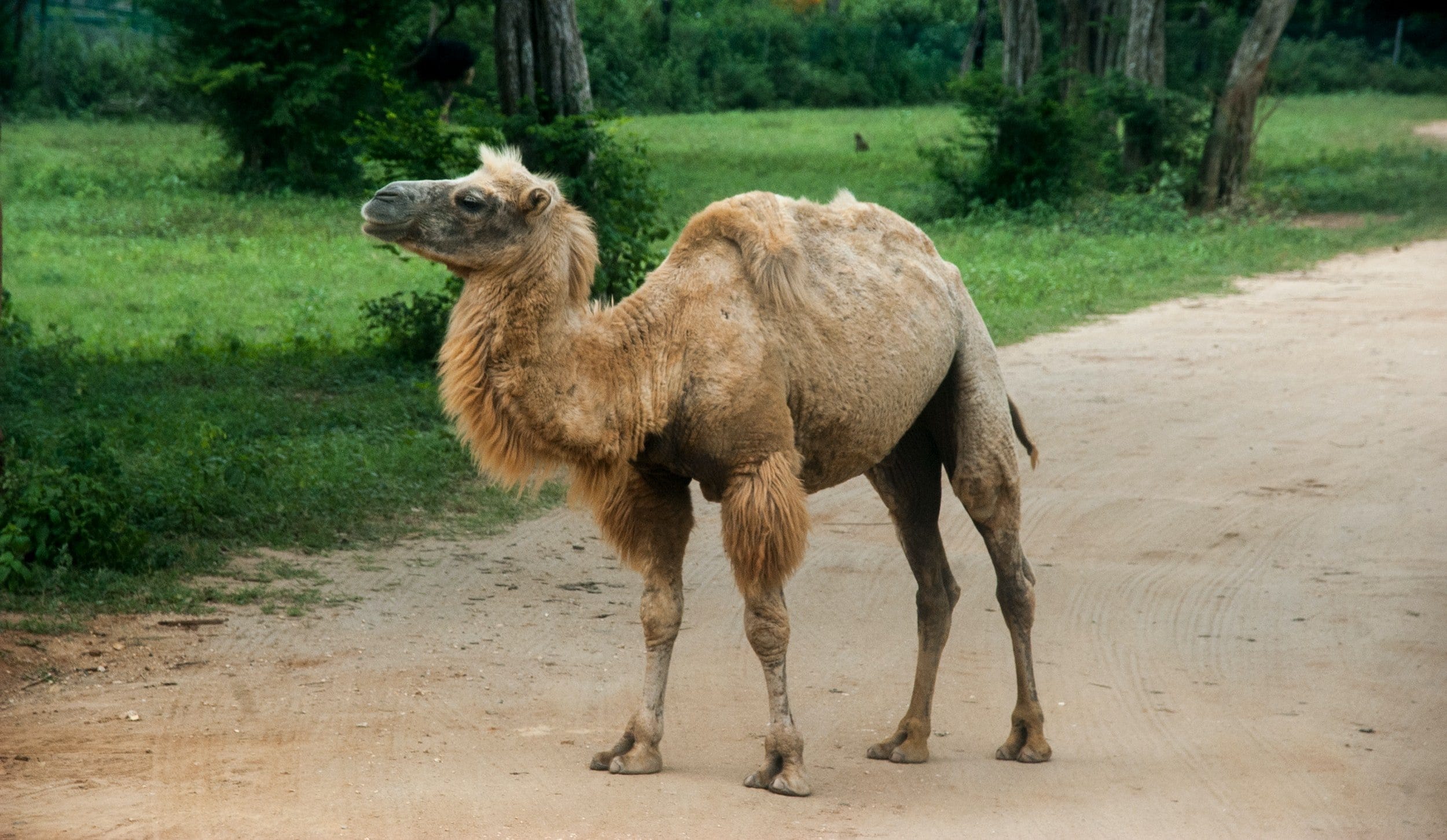
Also, as mentioned in the Disclaimer below, occasionally a chance encounter with a stranger (a goat on a leash, a camel in the San Juan islands, a sax-player in a convenience store) inspires me to spin an imagined life for that person but, again, the tale I create is not based on that person’s reality. And in fact whenever I realize I have inadvertently stumbled upon a specific person’s reality, I change the story.
Another example: I had originally chosen a name for one of the characters in What the Dogs Know, a name that I thought was unique and rare, and then I met someone by that name in a small and close-knit community, someone who shared the ancestry I had envisioned for my character. So I changed the character’s name.
For me, it comes down to this: factual truth has its place in memoir and non-fiction, but fiction deals in philosophical and emotional truths.
Just as importantly, I would never cannibalize the real heartaches and challenges of people I know for the sake of a story.
To sum up (as Inigo Montoya might say): if you think you recognize someone in The Dogs of Looser Island, please understand that is coincidental. There are no real San Juan islanders walking the pages of my stories.
With all that in mind, I give to you the Disclaimer, below. (Feel free to skip if you’ve read it before.)
Disclaimer
Legalese: The Dogs of Looser Island series is a work of fiction. Any similarity to actual persons [or dogs, cats, goats, or camels], now living or dead, or actual events, is purely coincidental.
Plainspeak: I want to make it very, very, (did I mention very?) clear that none of the characters in the Dogs of Looser Island series is based, even loosely, on any real person [or dog or cat or goat] that I know.
In other words, Looser Island does not exist.
This message is especially important to me now that one of the islands is my home. All of The Dogs of Looser Island stories were written years ago, before I moved to the islands. The chapters have been updated to reflect current issues in our shared community and some societal changes i.e. cell phones and social media are now part of the story, problems with the ferries have been added, etc. Also, being an inveterate tinkerer, I am always trying to refresh the prose to make it more vibrant and relevant.
But the basic storyline and characters remain exactly as they were first written, before I knew anyone who lived here.
The stories are set in the San Juan Islands and, on the Canadian side, in the Gulf Islands. I have taken the liberty of creating new names for my fictitious islands because, well, they’re fictitious, but also there’s this: there are so many marvelous islands in the archipelago, and limiting myself to populating my stories with just one island would have been impossible.
There have been moments that imprinted themselves on my heart, and they wound up in these stories.
For instance, many years ago, while visiting Lopez Island, I drove by a couple who were, as far as I could tell, walking their goat.
On a leash.
I know nothing about that couple or their goat, but a story spun itself out of that single encounter. (The story of “the new hippie couple” Liam and Geena, their daughter Daisy, and their goat Gafr, appear in The Dogs of Looser Island: What the Dogs Know.)
And my spirits have been lifted by glimpses of a delivery person who sings joyously while driving around on the island, who occasionally tosses a dog biscuit out the window at passing dogs. That, too, wound up in What the Dogs Know. The driver’s name isn’t “Missy” (as far as I know), there is no Hairy Horde (as far as I know), and there was no miserable childhood (as far as I know). I don’t even know if the driver likes Third Eye Blind or the soundtrack of the movie “Kinky Boots”. . . .
A beautiful inn near the ferry landing on Orcas captured my fancy, and I worked its fictional owners into a chapter of What the Dogs Know. In my imagination, the owners had lots of children and livestock and other jobs beyond running the inn. (Because I saw so, so many children on the grounds, obviously local; and because the inn is surrounded by farms; and because by then I knew one truism about life on the islands is that almost everyone holds down multiple jobs). After I had written the stories, and after we moved to one of the islands, I discovered another beautiful inn on “my” island, run by a family with . . . lots of children and livestock and multiple jobs. The owners are now friends, and I can assure you that neither they nor the Orcas inn owners “are” the Breckenridges I invented for these pages.
Then there was the visit to San Juan Island, when I drove past a field with, incongruously, a camel.
I now know her name was Mona, may she rest in peace. Thus was “Norm” born, the cheerfully combative camel who ruined an Easter Parade. Norm shows up in Who Laughs Last, but Norm bears no resemblance to Mona, other than belonging to the same species—and the series does not take place on San Juan Island. Because . . .
. . . The Dogs of Looser Island stories are fiction.
For some (surprisingly) fascinating background on legal disclaimers, check out the post Disclaimers: More Interesting Than You Think
Many who are wiser than I have pointed to this as a key function of fiction: there must be conflict, and there must be frustrated hopes and dreams. One of the many reasons I love fiction is that, although it must feel like real life in order to pull the reader in, unlike real life a good story can have a positive resolution. I love creating a world where happily-ever-after is at least a possibility.
It is my fervent hope that I succeed in the effort to avoid stereotypes and misappropriation, and I take steps to that end, including research and checking in with people I know who have direct experiences related to my story, nevertheless I know I fail from time to time, and I am both mortified and grateful for any reminders readers may share with me.
There’s also this: as woo woo as it sounds, my characters often present themselves to me, fully formed, and demand or plead or shyly request that I commit their stories to the page. When that happens, my feeble protest that I “don’t know anything about” their experiences usually elicits nothing more than a stern glance.
Well put, Shari. And my characters present themselves to me as well! It's one of the most magical parts of writing.